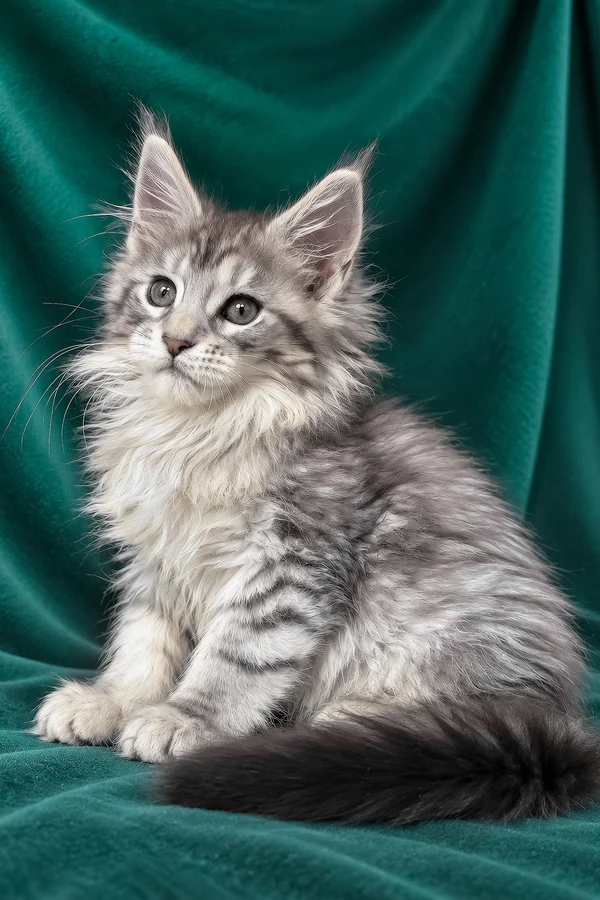
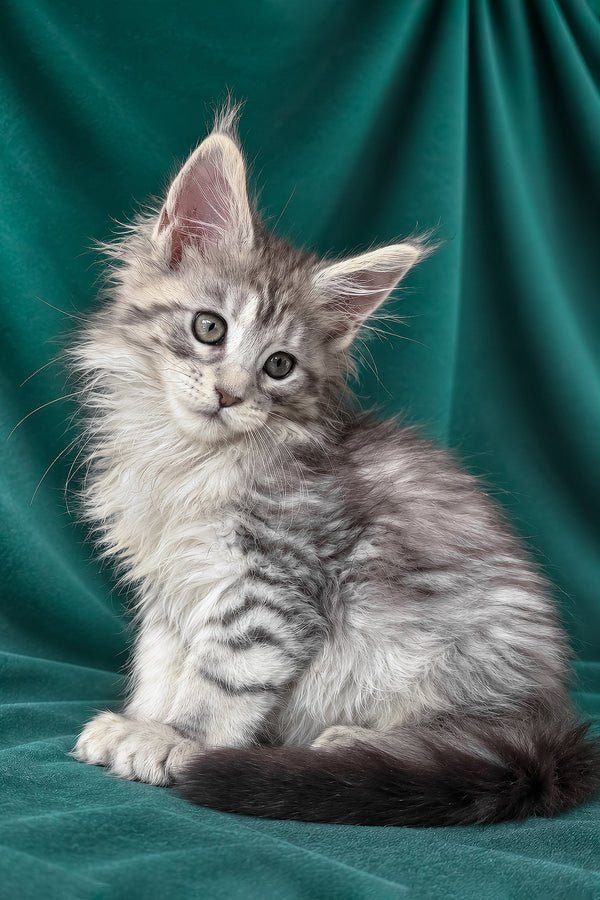
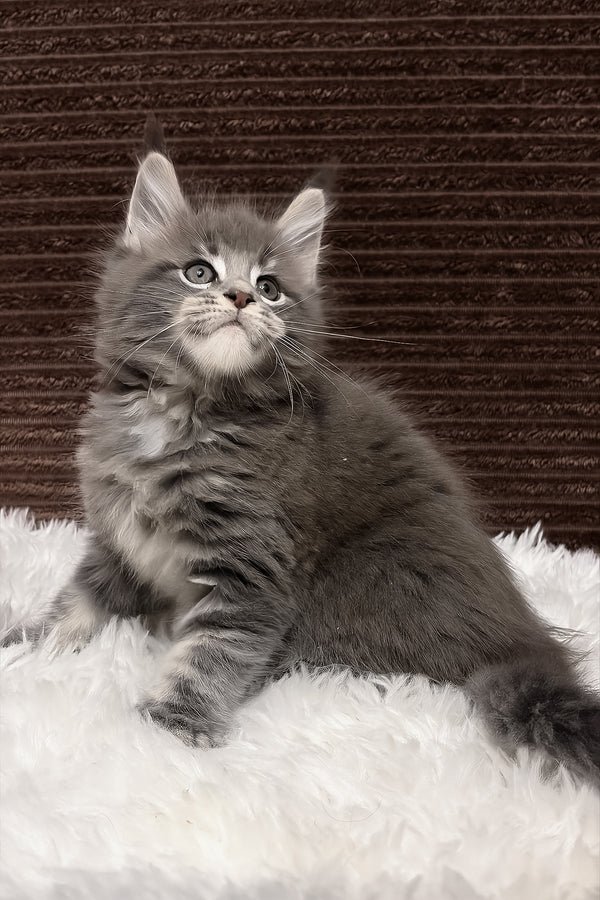
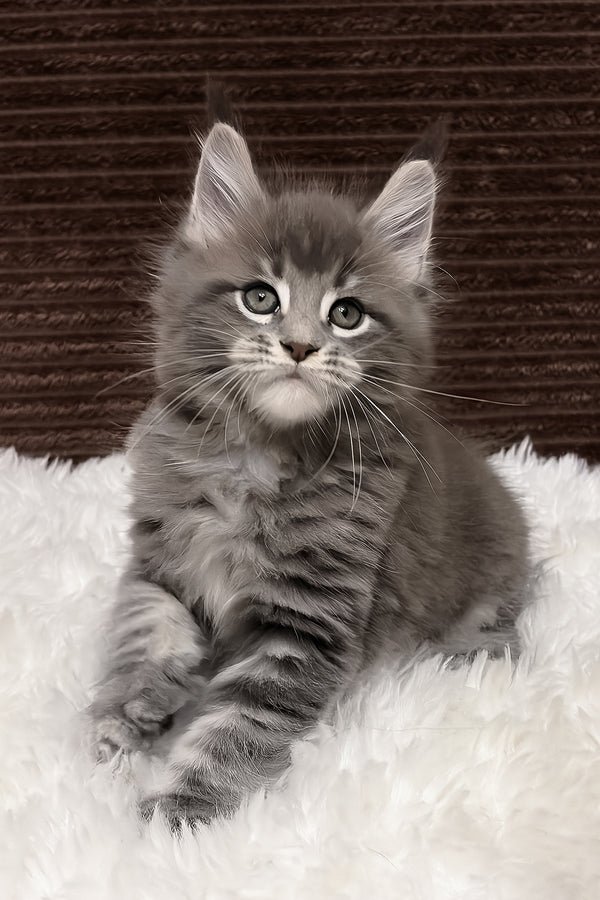
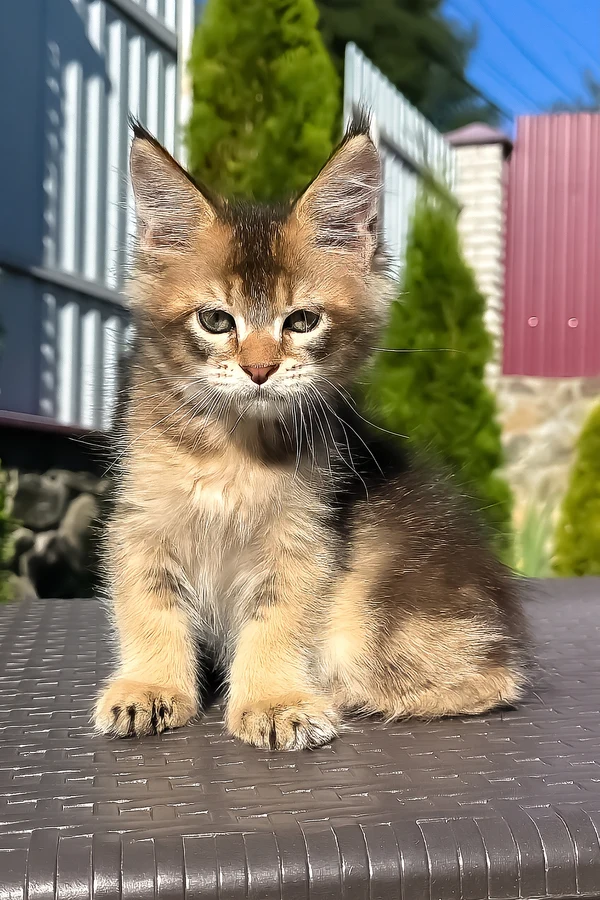
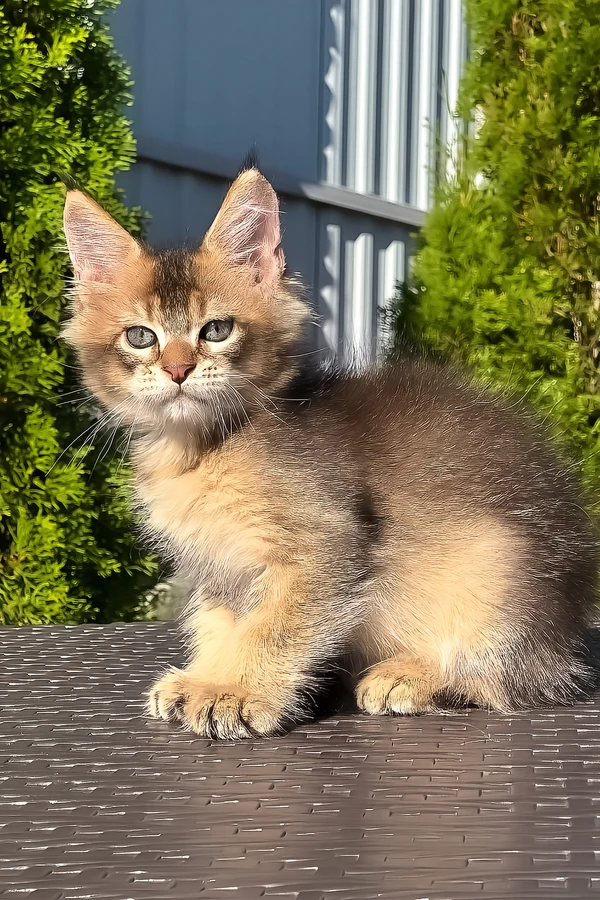
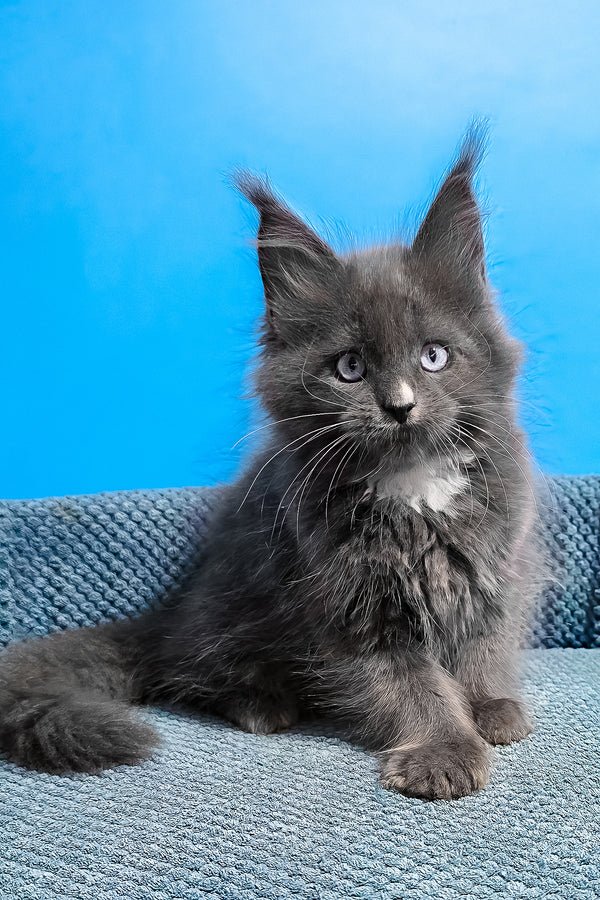
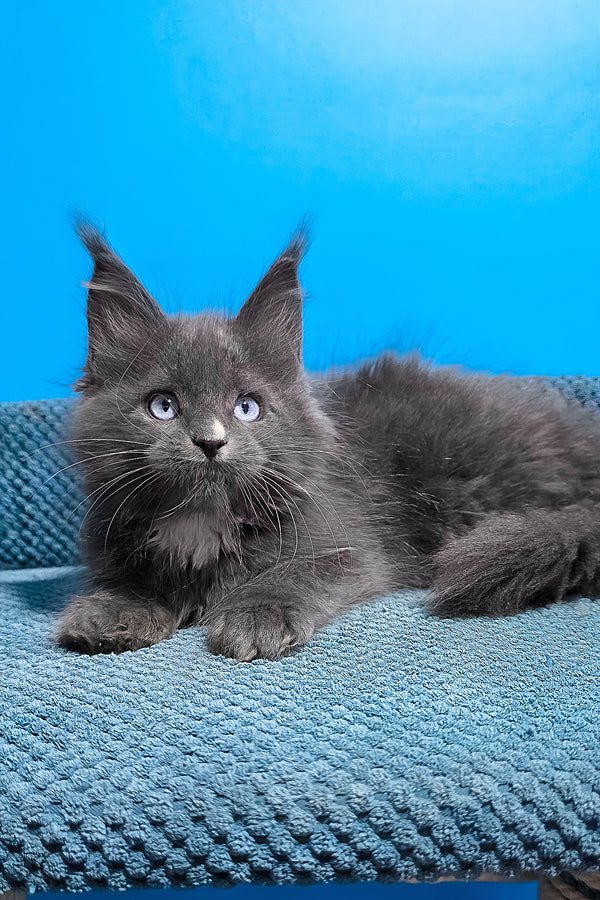
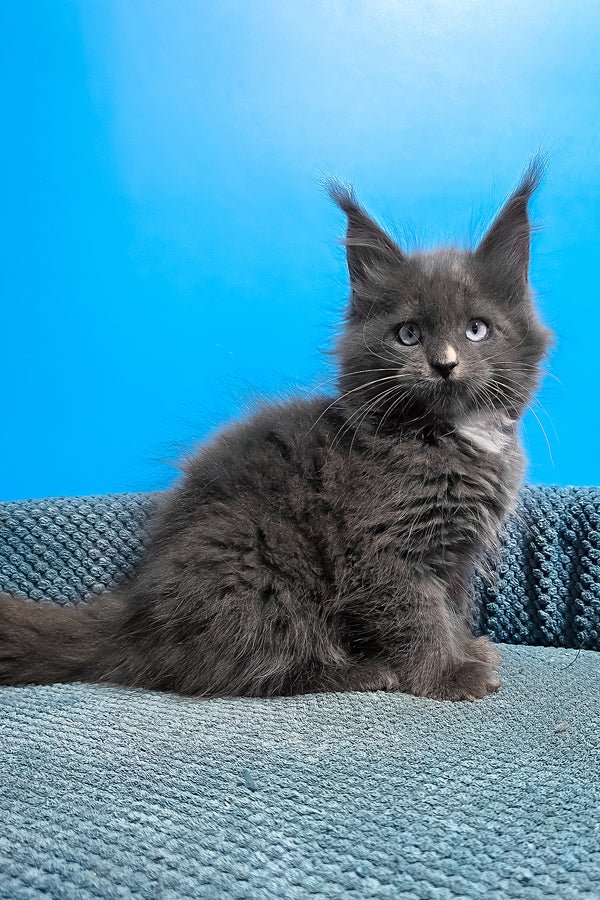
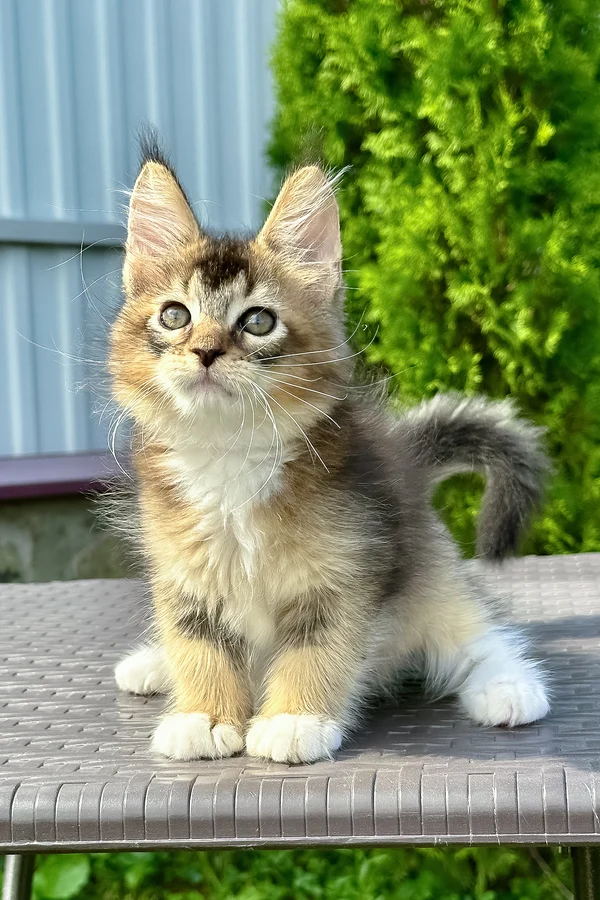
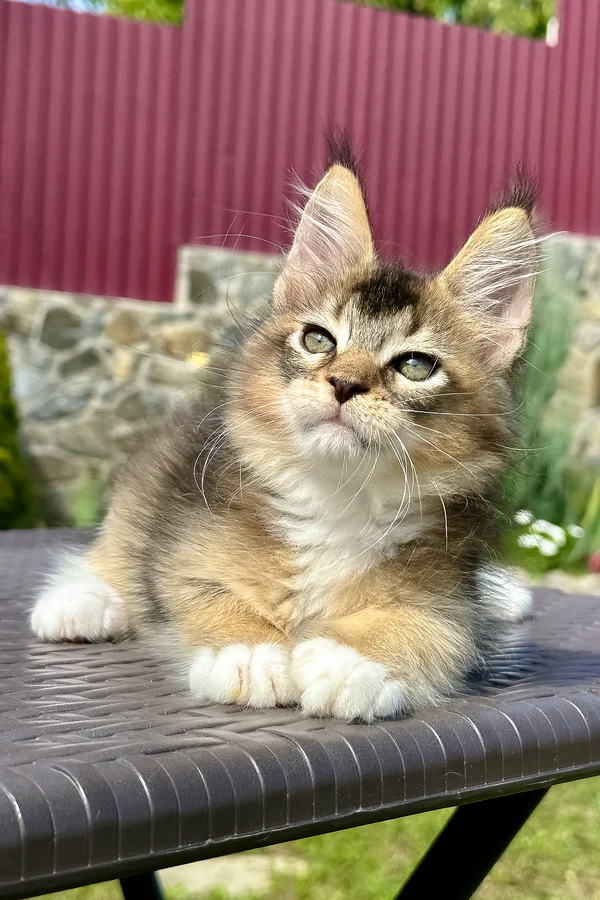
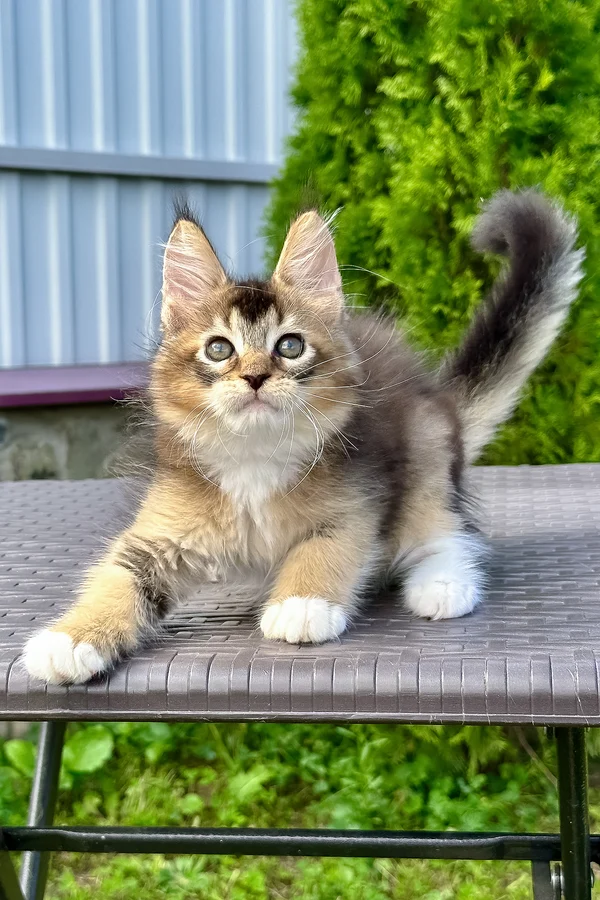
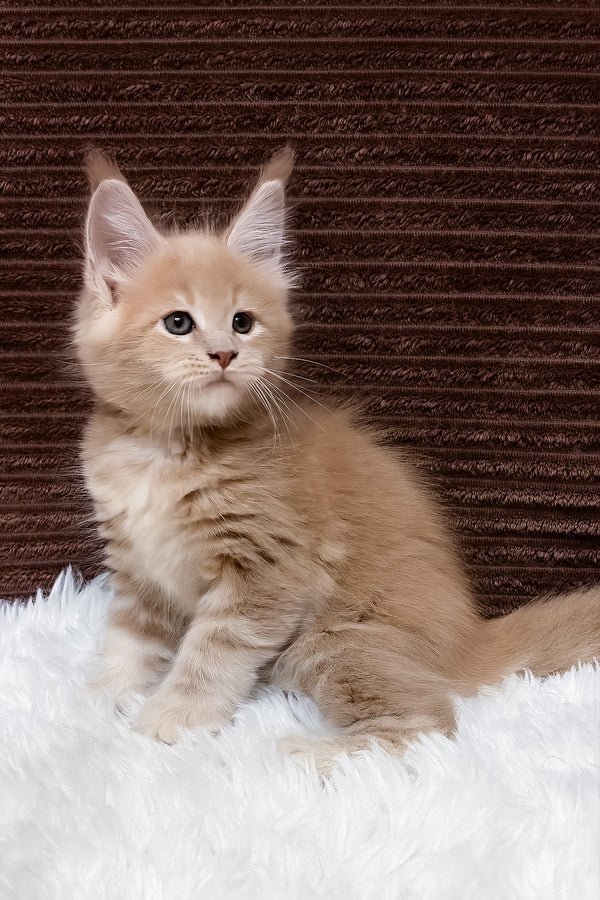
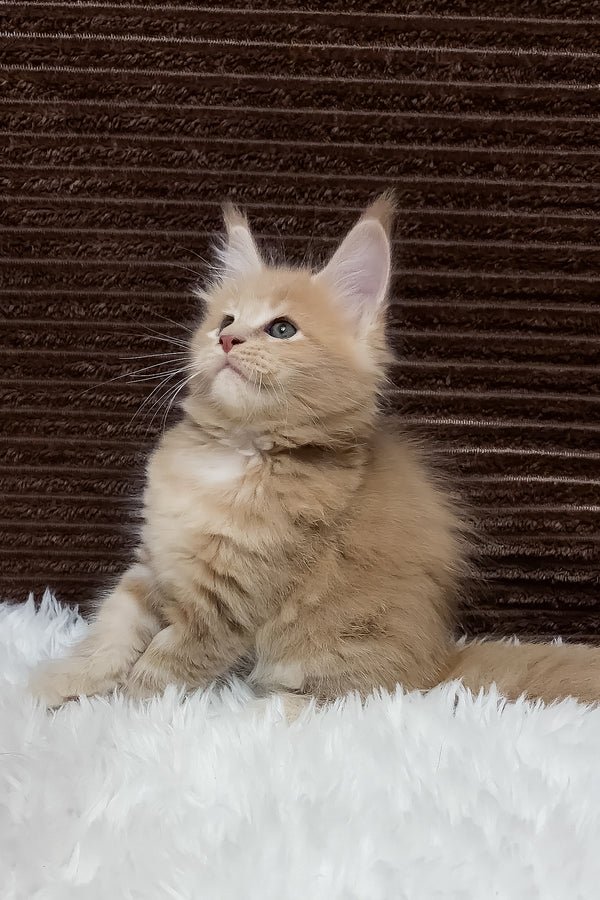
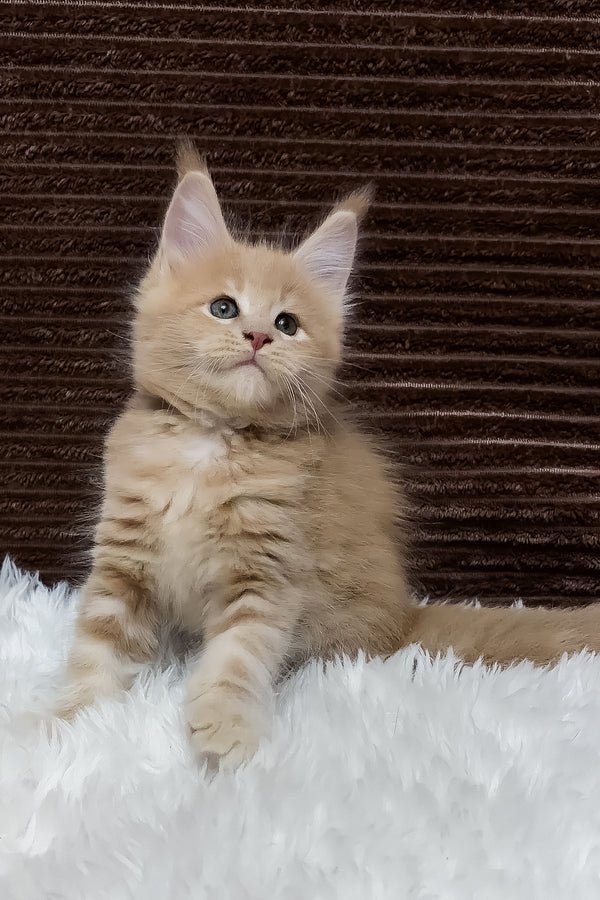
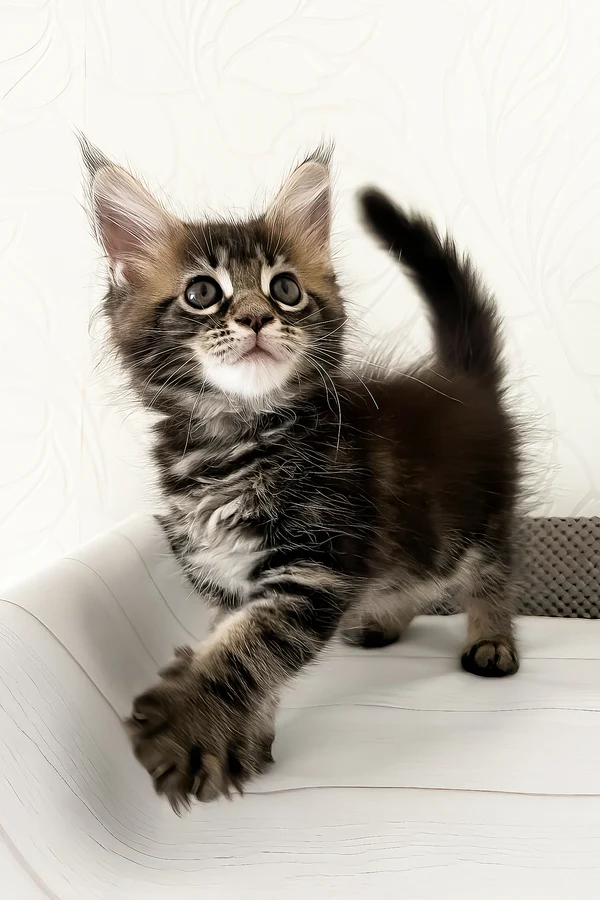
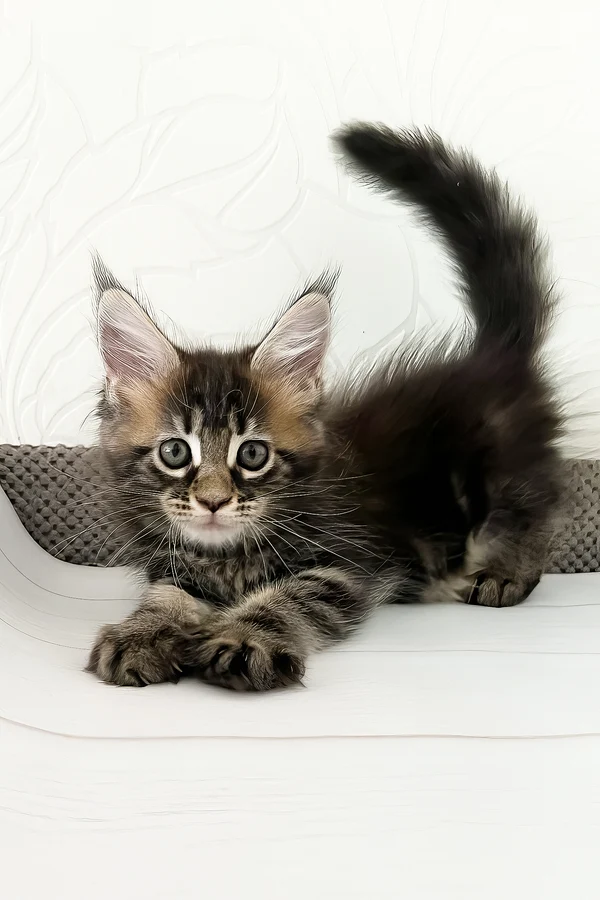
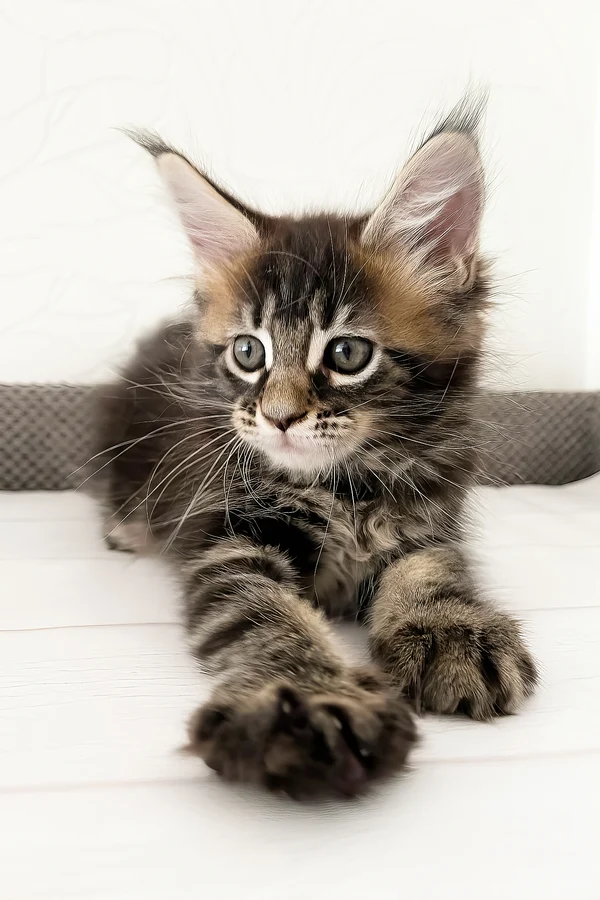
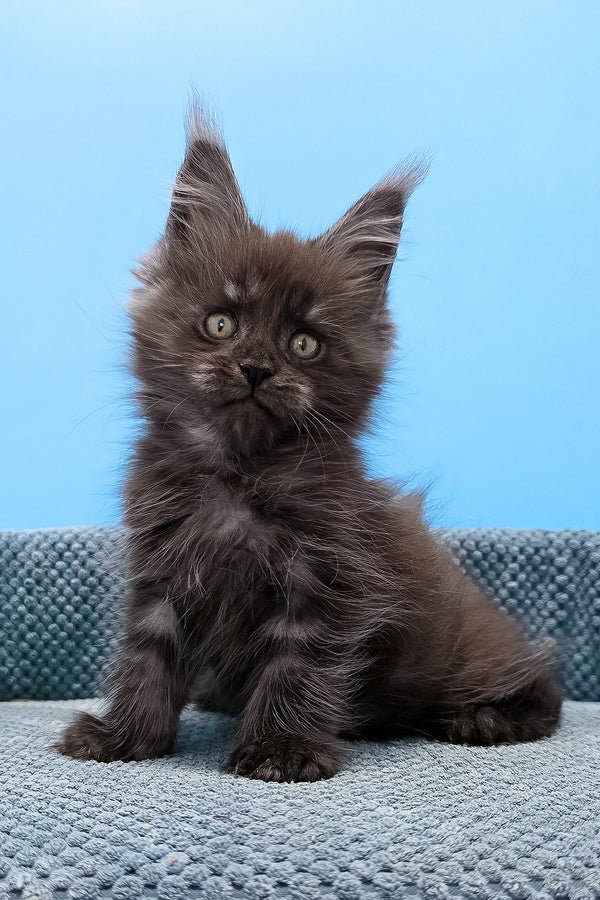
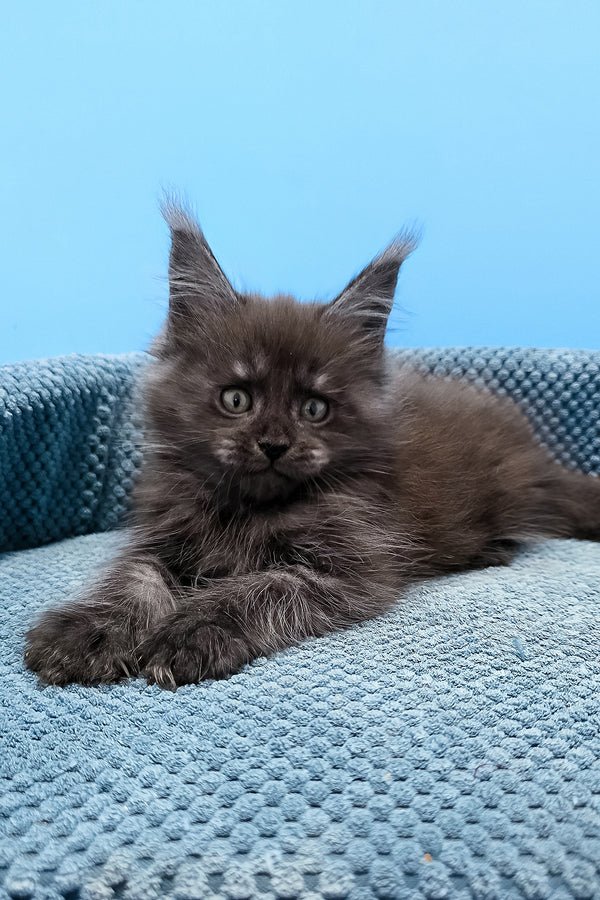
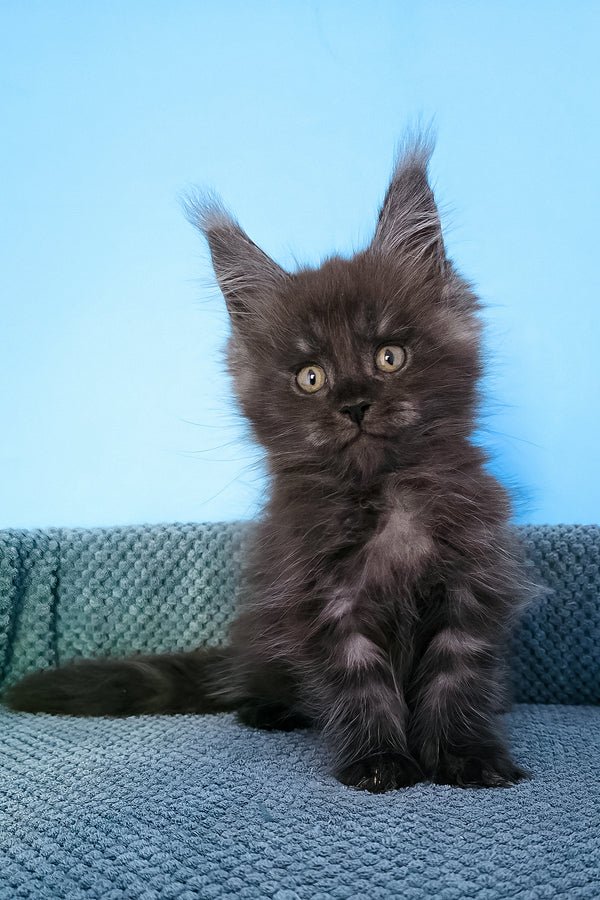
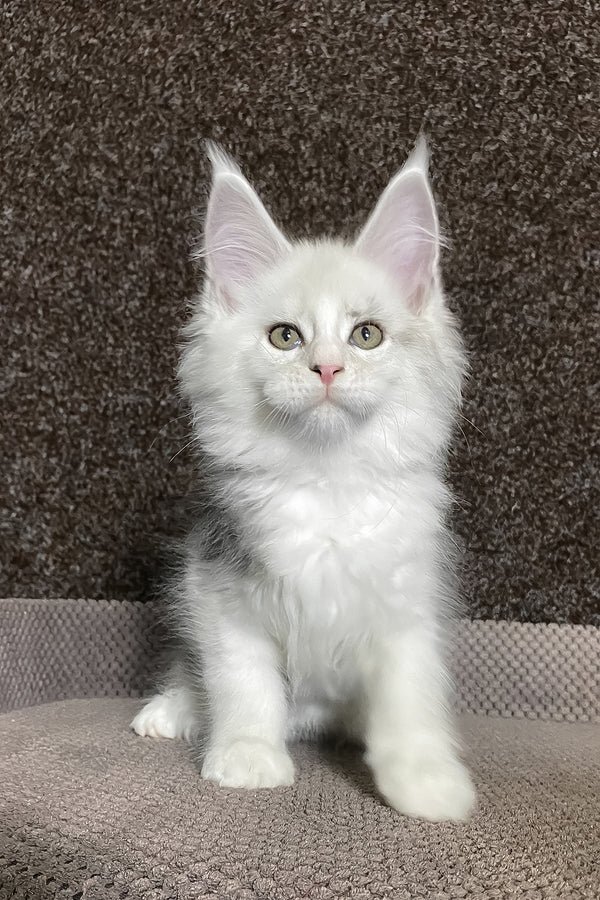
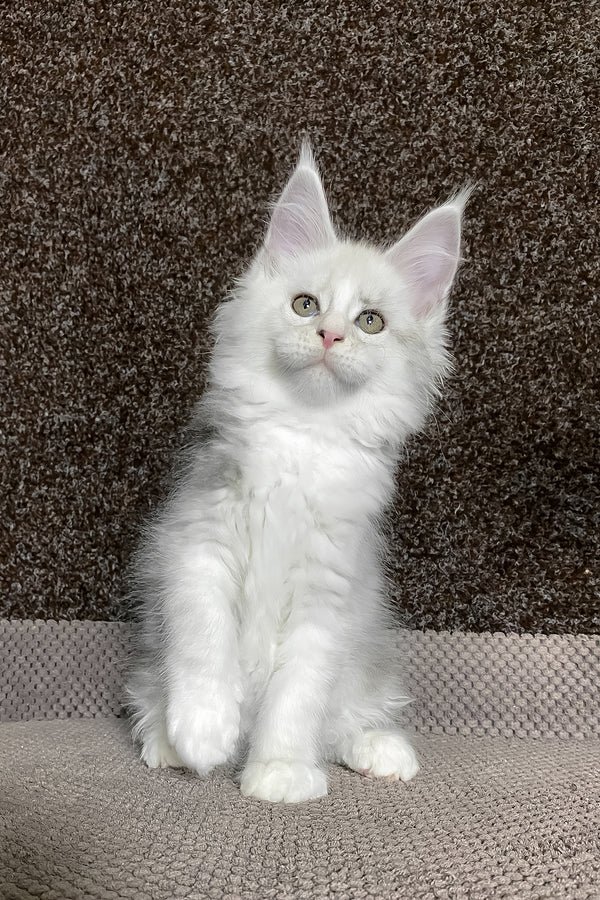
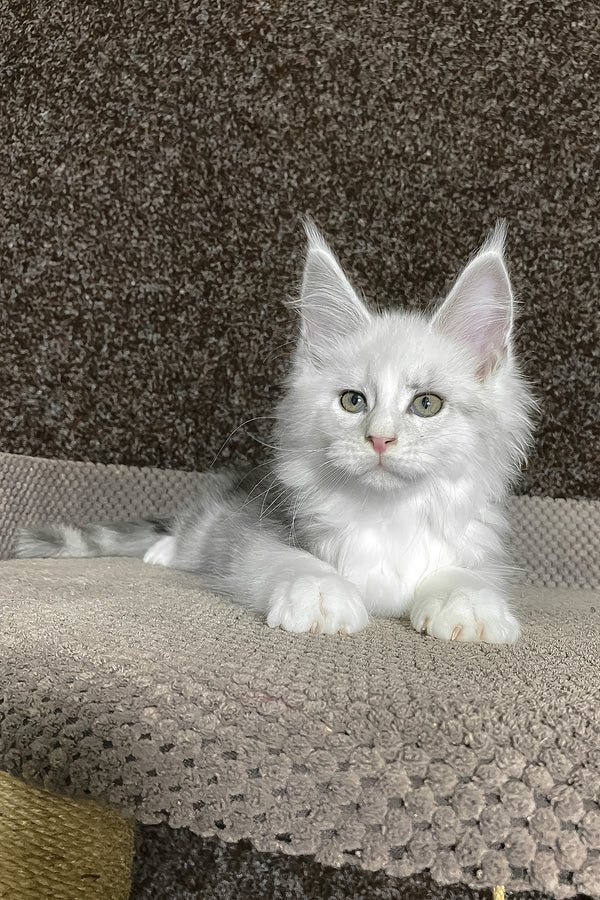
Prices include first vaccinations, deworming, microchip, health record and a written health guarantee. A deposit reserves your kitten until collection day.
Choosing a Maine Coon Kitten From Our Cattery
The cards above change as kittens are reserved. This part of the page does not — it is what we tell every family who calls us, written down once so you can read it before you decide.
What the colour names on each kitten mean
Maine Coon colour descriptions look intimidating written down, but they describe three simple things: the base colour, the pattern laid over it, and whether there is any white. Once you can read them, the listings above stop being a wall of jargon.
- Brown tabby — the classic Maine Coon look, warm brown with black striping. The colour most people picture when they imagine the breed.
- Blue tabby — "blue" in cats means a soft blue-grey. A blue tabby is grey with darker grey striping, often with a cream undertone.
- Classic versus mackerel — classic tabbies carry wide swirls and a bullseye on the flank. Mackerel tabbies carry narrow vertical stripes, like a tiger.
- Smoke — each hair is white at the root and coloured at the tip. A black smoke kitten looks solid black at rest and flashes silver when it moves. It is one of the most dramatic coats the breed produces.
- Silver shaded — a pale, almost frosted coat with colour only on the very tips of the hair, usually paired with green eyes rimmed in black.
- Tortie — short for tortoiseshell, a mottled mix of two colours. Torties are almost always female for genetic reasons, so a tortie boy is genuinely rare.
- With white — added to any of the above when the kitten carries white on the paws, chest or face. "Bicolour" means roughly half the coat is white.
Colour has no bearing on temperament or health. Choose the kitten whose personality fits your household and treat the coat as a bonus.
Male or female — does it actually matter?
Adult males run larger, typically reaching fifteen to twenty-five pounds against ten to sixteen for females, and they tend to be the more openly affectionate of the two. Females are often a little more deliberate about who they trust, and more inclined to supervise a room than sit in the middle of it. Both are sociable, both talk, and both will follow you from room to room. Since every kitten leaves here neutered or on a strict spay/neuter agreement , the behavioural differences people warn about in unaltered cats do not apply.
The Health Testing Behind Every Litter
This is the part of a breeder's answer worth reading slowly, because it is where the real difference between catteries sits.
- HCM — hypertrophic cardiomyopathy is the heart condition the breed is most prone to. Our breeding cats are screened by echocardiogram with a veterinary cardiologist, and we test for the known Maine Coon HCM gene variant.
- SMA — spinal muscular atrophy, a recessive condition. Parents are DNA tested so two carriers are never paired.
- PK deficiency — pyruvate kinase deficiency, also screened by DNA panel.
- Hip dysplasia — large, heavy cats are more exposed to it than most breeds, so breeding cats are X-rayed and scored.
- FeLV and FIV — every adult in the cattery tests negative, and we do not take in outside cats for breeding without a clear result first.
You are welcome to ask for the test certificates for a particular kitten's mother and father. Any breeder worth buying from will send them without hesitating. You can meet our breeding cats on our cats page.
Why Our Kittens Leave at Twelve Weeks
A kitten taken home at eight weeks is a kitten who missed the month that teaches it how to be a cat. Between eight and twelve weeks the litter does the work no human can do for them: bite inhibition, reading other cats, settling after a fright, confident litter box habits. Kittens who get that month arrive in your home already resilient, and the difference shows for years.
It is also a medical window. By twelve weeks a kitten has had its first vaccinations and boosters, has been dewormed on schedule, has been microchipped, and has been examined by our veterinarian with a written record you take home with you. Leaving earlier means doing all of that in a strange house during the most stressful week of a kitten's life.
If a breeder offers you a Maine Coon at six or eight weeks, that is not a favour to you. It is a cost saving for them.
Pickup and Delivery
Most of our families collect their kitten in person, and we encourage it — you get an unhurried hour here, you meet the parents, and the kitten travels in a car with people it is about to live with rather than in a cargo hold.
We regularly place kittens with families in Toronto, Mississauga, Hamilton, Ottawa, London, Kitchener, Barrie and Kingston, and pickup from the cattery is straightforward from anywhere in southern Ontario.
For families further away we can arrange ground transport within Ontario and Quebec, or a flight nanny who carries the kitten in-cabin rather than as cargo. Cross-border placement into the United States is possible and requires a health certificate issued close to the travel date. Delivery is quoted separately from the kitten price — ask us for a figure for your city before you place a deposit.
How to Tell a Real Cattery From a Scam
Maine Coons are expensive, which makes them a favourite of people selling kittens that do not exist. We would rather you buy from a careful breeder somewhere else than get taken by a fake listing, so here is what to look for — including when you are looking at us.
Walk away if:
- The only payment methods offered are gift cards, cryptocurrency, wire transfer or a friends-and-family app payment with no buyer protection.
- They will not do a live video call with the kitten. A real breeder can hold a phone up to a real litter in under a minute.
- The photos appear elsewhere online. Run a reverse image search on any kitten photo before you send money.
- The price is far below the going rate. Nobody sells a tested, registered Maine Coon kitten for a few hundred dollars.
- There is no written contract, no health guarantee, and no spay/neuter agreement.
- They will not name the veterinary clinic that sees their cats.
- You are being pushed to decide today because "another family is waiting".
Ask any breeder, including us: may I see the parents' health test certificates, may I video call, which vet do you use, what exactly does your health guarantee cover and for how long, and what happens if I can no longer keep the cat in three years? The last question tells you more than the first four. Our full terms are on the reservation policy page.
If the Kitten You Wanted Is Already Reserved
It happens often, particularly with the smoke and silver kittens. Two things are worth knowing. First, a reservation is not always final — deposits occasionally fall through, and the families on our waiting list hear about it first. Second, our queens are on a planned schedule, so the next litter is usually closer than you expect. You can see what is coming on the upcoming litters page.
Joining the waiting list costs nothing and commits you to nothing. You tell us roughly what you are hoping for — sex, colour, timing — and we contact you before a litter is listed publicly.
Before You Send a Deposit
Read the price page so there are no surprises about what is and is not included, and have a look at the care guide — particularly the grooming section, because a Maine Coon's coat is a real commitment and it is better to know that now than in March. The FAQ answers most of what families ask us by email.
When you are ready, send us a note telling us which kitten caught your eye and a little about your household. We answer every inquiry personally, usually the same day.